
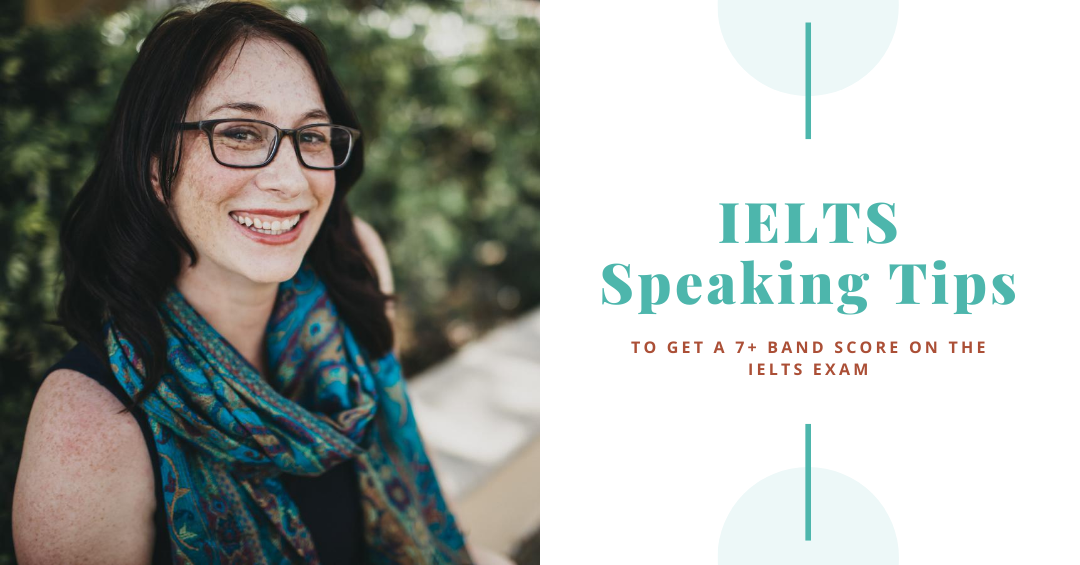
Ever wondered why some students can express themselves confidently in English in the IELTS interview, but others can't even express their simple ideas in English? Getting a Band 7 in the IELTS Speaking section is not as difficult as it may seem, but more about strategy. In fact, a lot of students fail to score marks in English because they are not really looking for the required marks.
In the IELTS Speaking test, it is not just about speaking fluent English. It's about being confident, clear, having vocabulary, pronunciation, and being natural. Students learn by rote and attempt to be “too perfect,” but this frequently has an adverse effect. Rehearsed answers are easily recognisable by the examiner. What they really desire is natural communication. If you are continuously thinking about how to get 7 in speaking IELTS, then this blog is just crafted for your benefit.
International university admissions, improved job prospects, and immigration prospects are some of the possibilities that open up once you achieve band 7. Fortunately, this goal is quite attainable, and you just need to work on it in a proper manner. These helpful hints will make a huge difference in your IELTS preparation success, both as a self-study learner and when you're learning with the Best IELTS center.
If you are aiming for a 7 Band in the Speaking section of the IELTS test, it’s essential to use the following top 5 tips to change your mind.
-
Don’t learn your answers
The most common error that students make when preparing for the IELTS is getting their answers ready from the internet and speaking them in a robotic manner. It is comfortable to speak, but it can give your speech a natural impression. After just listening to your speech, the examiners could easily make out that you had learned your answers prior to the exam. Try to speak your thoughts in an unconstrained manner. It is often noticed that it is good to speak with confidence and fluency, rather than being scripted, even if with some grammatical errors. Don't try to give a textbook answer to the question.
-
Give more naturally inclined answers
You need to remember that natural conversations make a good impression and help to improve your fluency. In order to improve fluency, one should not speak quickly, as this is not a good practice. Just try to manage your pace and speak naturally. Quick speech is thought by many students to show fluency in speech. In fact, the faster you speak, the earlier you may start to mispronounce words and feel nervous, and start speaking grammatically incorrectly. Fluency is not speed of communication; it's smoothness. Band 7 speakers can present ideas with no hesitation or pauses between ideas. Even if you are just speaking English for 15-20 minutes a day, to improve fluency, start speaking English daily. You can easily get the answer to how to get 7 in speaking IELTS if you tend to follow all the tips mentioned in this blog.
-
Discuss and analyse your speaking session
Discuss your experiences of the day, or describe objects around you or have yourself read your answers to IELTS sample questions. The most effective way of doing this is called shadow speaking. Remember, a speaker who is calm and clear, will always get more points than a rush through the speaker. The more you analyse your speaking session the more you will get the answer why you are fumbling or not attaining basic fluency.
-
Usage of the right and good vocabulary
A credible and good type of vocabulary is necessary for achieving band 7. But, many students are prone to using words that are hard to read that do not really need to be used. The use of the vocabulary incorrectly can reduce the score. The important thing is to 'naturally' use words that are associated with the topic. When talking about technology for example, words such as 'innovation' or 'digital communication' or ‘artificial intelligence' could help bolster your answer. Also, when discussing travel, such expressions as “cultural exposure” or “breathtaking destination” can boost up your speech.
-
Focus on pronunciation, not just on Accent
There is no denying the fact that people's accents are not quite as important as their pronunciation. Emphasis should be placed on the pronunciation of words, the stress on the appropriate words and the intonation of the sentence. Spelling of frequently used words can be repeated and impact on the score. Another excellent method is to tape yourself. Listening to your own voice allows you to hear what you are saying and to become aware of words that are unclear, incorrect stress or repeated pronunciation errors.
-
Self-assurance
Self-assurance is also said to affect pronunciation. Students are prone to have a nervous manner of speaking and mumble. So, speak up and enunciate on a daily basis. Practice speaking tests regularly to get used to how they’re conducted. Although you may have a vast range of vocabulary and grammar, in the end, the real key to achieving success in IELTS Speaking is practice. You can practice speaking tests in a mock session, get used to the format of the tests, and alleviate exam anxiety. Be aware of the use of filler words such as “umm”, “you know,” and “actually” as these words can adversely affect fluency if overused. So, try to avoid using them and try to gain great confidence. Even something as simple as thinking in English all day long can help be a habit. Helps the brain to be alert to respond during the actual interview.
Don’t hesitate to turn to the PTE exam if you are in search of an English proficiency test that comes with an easy structure. Also, you can go ahead with an incredible PTE Coaching near your hometown, known for its high-quality services and expertise in providing the best PTE exam guidance.
Wrapping Up
It's about natural, confident and effective communication. Students' success is much greater if they work on fluency, vocabulary and pronunciation as well as practising many times than if they can only remember the set texts. In IELTS Speaking you will express yourself and get to know your personality. Be prepared, calm and confident in your presentation. Each conversation you practice, moves you one step towards your dream Band score.

 English
 Arabic
 French
 Spanish
 Portuguese
 Turkish
 Dutch
Dutch
 Italiano
 Russian
 Romaian
 Portuguese (Brazil)
 Greek
Greek