
Introduction
If you own a commercial building or office in Bangladesh, ensuring safety during thunderstorms is crucial. A well-maintained Lightning Protection System in Bangladesh can save lives and protect property from severe damage. At Protart, we prioritize not just installation but also proper maintenance to keep your system reliable and efficient.
1. Why Lightning Protection System Maintenance Matters
Many people assume that once a lightning protection system is installed, it’s good for life. But in reality, regular maintenance is essential. Weather, corrosion, and wear over time can compromise the system, increasing risks during storms.
2. Schedule Routine Inspections
The first step in maintenance is conducting routine inspections. A thorough check at least twice a year ensures every component, from air terminals to grounding rods, functions properly. Protart recommends scheduling inspections before and after the rainy season in Bangladesh.
3. Check for Corrosion
Lightning protection systems often use copper or aluminum components. Over time, exposure to rain and humidity can cause corrosion, which weakens the system’s efficiency. Regularly examine these components and replace any corroded parts immediately.
4. Inspect Lightning Rods and Air Terminals
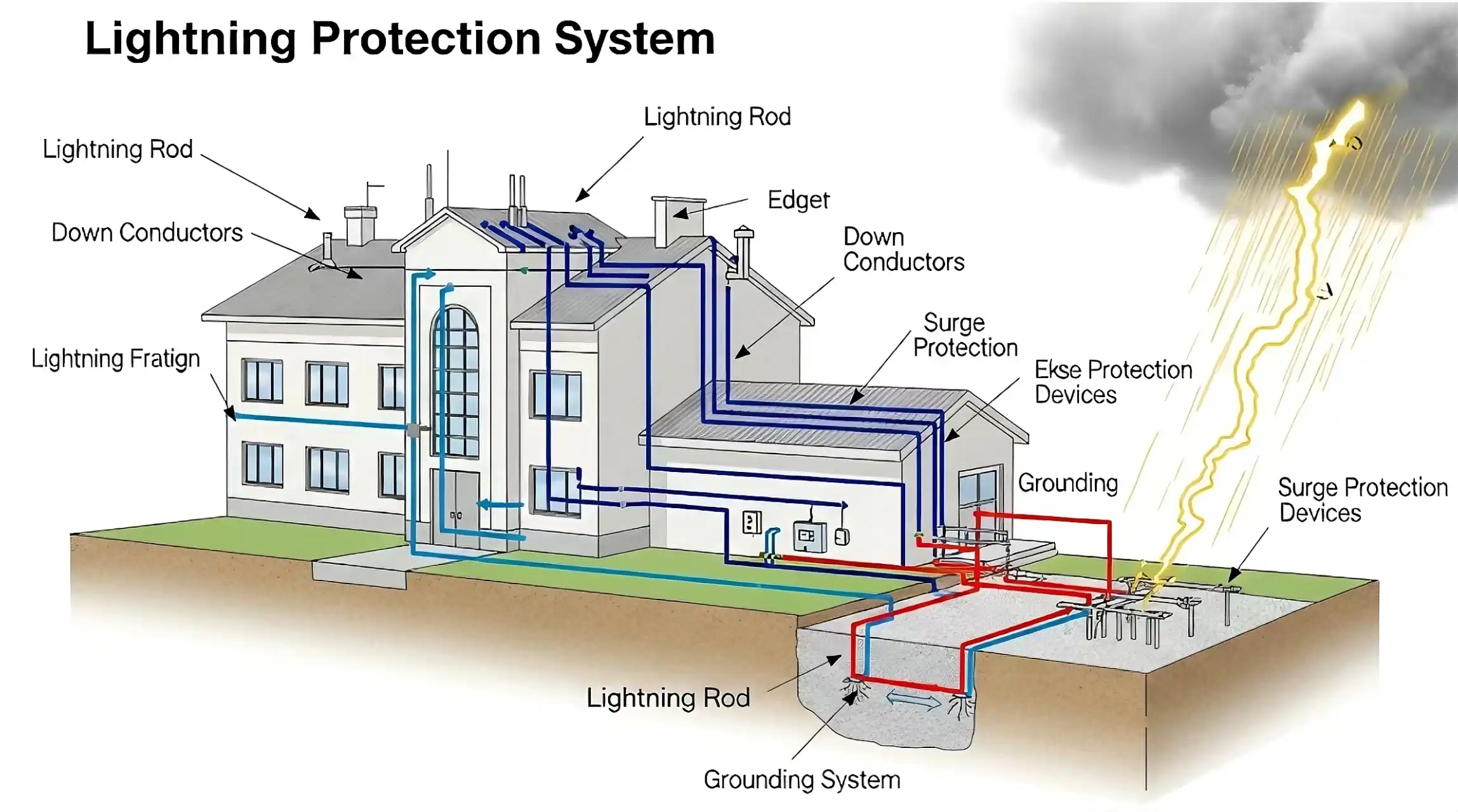
Lightning rods are the first point of contact for a lightning strike. Ensure they are straight, firmly attached, and free of physical damage. Protart technicians advise checking for loose connections or bent rods during each inspection.
5. Examine Conductors and Cables
The conductors that guide the lightning current safely to the ground must remain intact. Check for cracks, rust, or signs of wear. Damaged conductors can divert lightning energy dangerously.
6. Grounding System Check
A strong grounding system is critical. Test the resistance of grounding rods periodically to ensure it meets local safety standards. Low resistance allows lightning energy to dissipate efficiently into the earth. Protart uses advanced testing tools to verify proper grounding.
7. Maintain Surge Protection Devices
Surge protectors are integral to preventing electrical damage during strikes. Inspect these devices regularly and replace them if they show signs of wear or malfunction. This step ensures your office equipment and electronics remain safe.
8. Remove Obstructions Around Lightning Rods
Trees, antennas, or construction materials near lightning rods can interfere with their efficiency. Keep the surrounding area clear to ensure the system performs optimally during storms.
9. Document All Maintenance Activities
Keeping detailed records of inspections, repairs, and replacements helps track the system’s health. These records can also be useful for insurance claims in case of lightning damage. Protart maintains a maintenance log for each client to ensure accountability.
10. Hire Certified Professionals
While some minor inspections can be DIY, professional maintenance ensures safety and accuracy. Protart’s certified team in Bangladesh specializes in comprehensive lightning protection system maintenance, guaranteeing reliable performance.
11. Signs Your System Needs Immediate Attention
Watch out for rust, loose fittings, frequent electrical surges, or damaged rods. If you notice any of these signs, schedule an urgent inspection. Addressing issues promptly prevents costly damage during storms.
12. Educate Your Staff About Safety
Maintenance isn’t just about hardware. Train your staff on what to do during thunderstorms and how to avoid electrical hazards. A well-informed team complements the protection provided by your system.
Conclusion
Regular maintenance is the key to an effective Lightning Protection System in Bangladesh. From inspections to grounding checks, following these tips ensures safety and reliability. Protart is dedicated to helping businesses maintain robust lightning protection systems and stay secure during every storm.

 Arabic
 French
 Spanish
 Portuguese
 Deutsch
 Turkish
 Dutch
Dutch
 Italiano
 Russian
 Romaian
 Portuguese (Brazil)
 Greek
Greek